
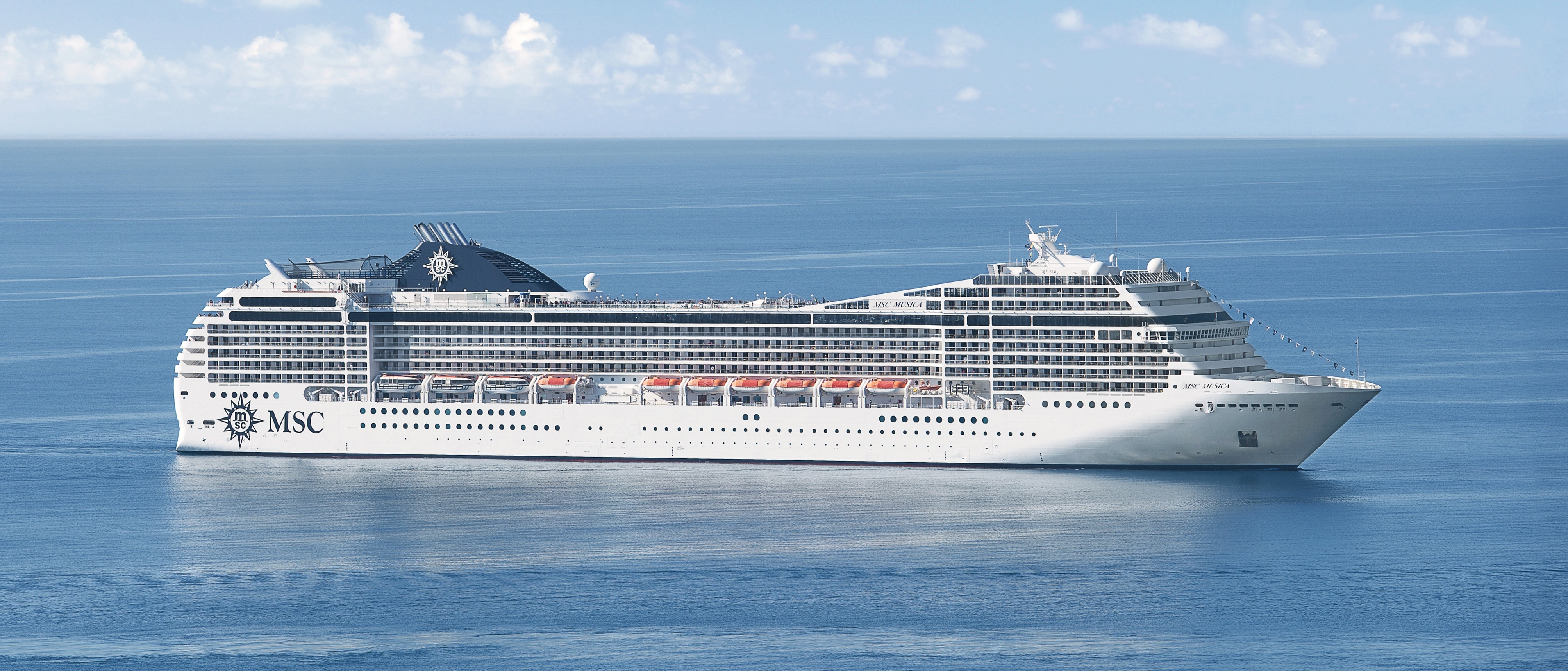
1 night South America from Santos (Sao Paulo)
Hong Kong market · HKD
MSC Cruises
MSC Musica
Sao Paulo
Rio de Janeiro
–Day-by-day itinerary
- Sao PauloSão Paulo, Brazil’s vibrant financial center, is among the world's most populous cities, with numerous cultural institutions and a rich architectural tradition. Its iconic buildings range from its neo-Gothic cathedral and the 1929 Martinelli skyscraper to modernist architect Oscar Niemeyer’s curvy Edifício Copan. The colonial-style Pátio do Colégio church marks where Jesuit priests founded the city in 1554.
- Rio de JaneiroAs you’ll be able to appreciate when you cruise the Atlantic Ocean with MSC Cruises, in its position on the southern shore of the magnificent Guanabara Bay, Rio de Janeiro has, without a shadow of a doubt, one of the most stunning settings in the world. Extending for 20km along an alluvial strip, between an azure sea and forest-clad mountains, the city’s streets and buildings have been moulded around the foothills of the mountain range that provides its backdrop, while out in the bay there are many rocky islands fringed with white sand. The aerial views over Rio are breathtaking, and even the concrete skyscrapers that dominate the city’s skyline add to the attraction. As the former capital of Brazil and now its second-largest city, Rio has a remarkable architectural heritage, some of the country’s best museums and galleries, superb restaurants and a vibrant nightlife – in addition to its legendary beaches. A shore excursion on your MSC South America cruise can be the opportunity to visit the Pão de Açúcar. The Sugar Loaf Mountain rises where Guanabara Bay meets the Atlantic Ocean. Its name may simply reflect a resemblance to the moulded loaves in which sugar was once commonly sold. Alternatively, it may be a corruption of the indigenous Tamoya word Pau-nh-Açuquá, meaning “high, pointed or isolated hill”. On the top of Corcoavado Mountain instead the Art Deco statue of Cristo Redentor (Christ the Redeemer), arms outstretched in welcome, stands 30m high and weighs over 1000 tonnes. It was supposed to be completed for Brazil’s centenary independence celebrations in 1922, but wasn’t actually finished until 1931. In clear weather, fear no anticlimax: climbing to the statue is a stunning experience, with the whole of Rio and Guanabara Bay laid out before you.