
London (Southampton) -TO- Lisbon
Hong Kong market · HKD
Regent Seven Seas Cruises
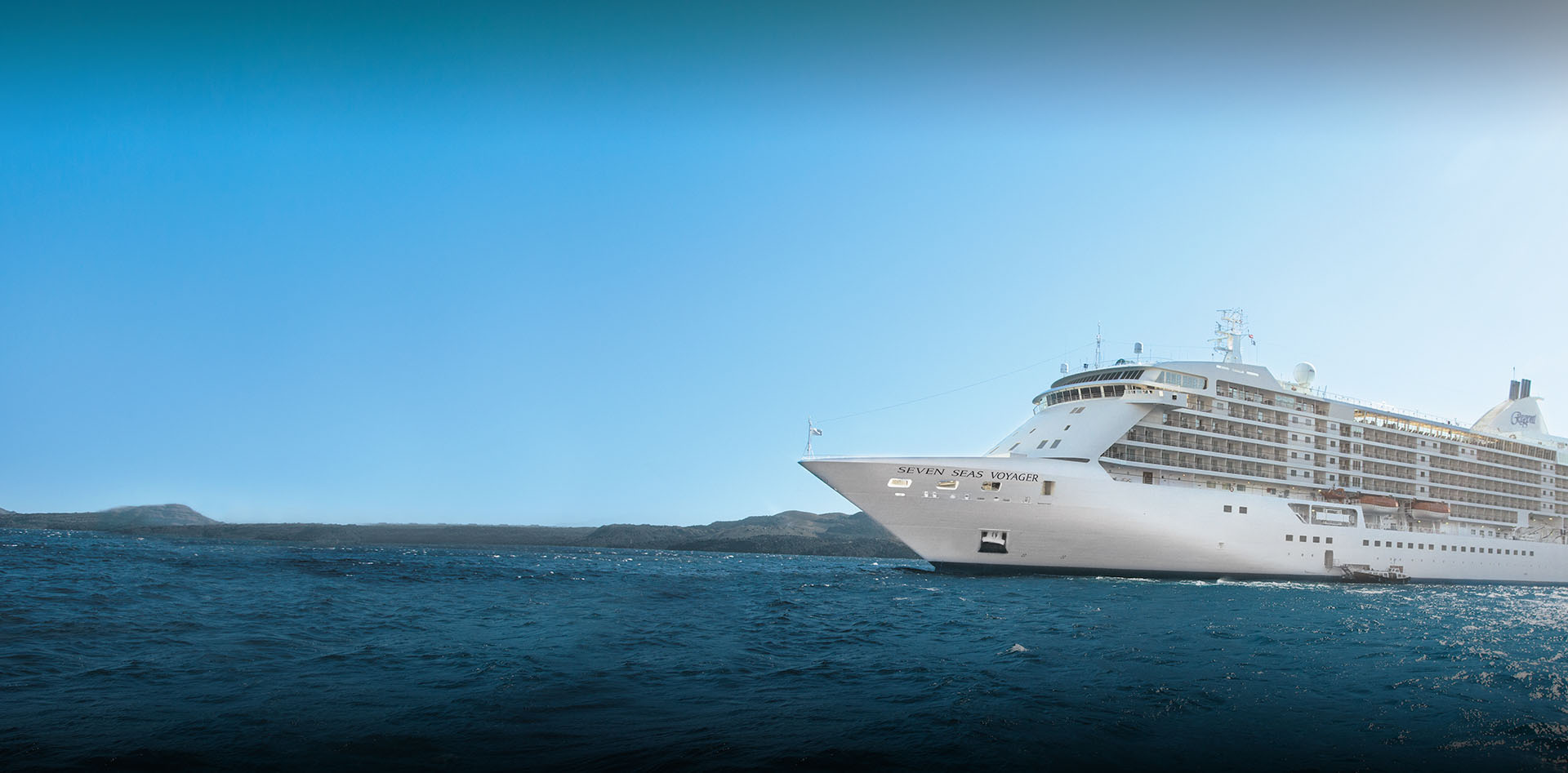
Seven Seas Voyager
Southampton
Lisbon
–Day-by-day itinerary
- London (Southampton)Southampton is the largest city and port on the south coast of England. Tour the historic byways of Old Town with its Medieval walls and Tudor architecture. Spend an hour or two meandering along the pathways of Royal Victoria Country Park, picturesquely set along the waterfront on the grounds of a former military hospital where Florence Nightingale once worked. Southampton's maritime past can be explored by strolling along the Town Quay with its marina and lively bars and restaurants. It was here that the Titanic departed on its fateful journey and where the Mayflower sailed for the New World.
- Cruising the North Sea
- AmsterdamAs capital cities go, Amsterdam is small in comparison. It has a reputation for free-spirited and very liberal lifestyles. Some might call it Europe's most "radical" city, but one cannot deny the beauty of Amsterdam and its rich history. Amsterdam is a cultural center of Europe, as exemplified in its more than 140 art galleries and 40 museums. In addition, it is famous for its baroque architecture, canals, and cobblestone streets where the favored mode of transportation is the bicycle.
- Bruges (Zeebrugge)Zeebrugge is the gateway to Bruges, the capital of the Belgian province of West Flanders. Bruges was a wealthy city during medieval times when trade with Baltic ports flourished. The Zwin River, connecting Bruges with the North Sea, slowly began to narrow, marking the end of the city's great trade period. Today, visitors flock to Bruges to enjoy the charming, well-preserved medieval architecture lining the old and narrow roads and canals and to see some of Western Europe's finest artistic masterpieces.
- Le HavreLe Havre is a major port in northern France's Normandy region, where the Seine River meets the English Channel. It's joined to the city across the estuary, Honfleur, by the Pont de Normandie cable-stayed bridge. Following WWII, Le Havre's heavily damaged city center was famously redesigned by Belgian architect Auguste Perret. Today it features many landmark examples of reinforced-concrete architecture.
- Bay of Biscay
- La Rochelle, France
- BordeauxBordeaux is located near the European Atlantic coast, in the north of the Aquitaine region in France. The city is built on a bend of the river Garonne, with the city literally divided into two parts. The world's wine capital, Bordeaux has about 60 appellations, 9,000 wine-producing châteaux, and 13,000 grape growers. With an annual production of over 700 million bottles, Bordeaux produces large quantities of everyday wine as well as the most expensive ones.
- BordeauxBordeaux is located near the European Atlantic coast, in the north of the Aquitaine region in France. The city is built on a bend of the river Garonne, with the city literally divided into two parts. The world's wine capital, Bordeaux has about 60 appellations, 9,000 wine-producing châteaux, and 13,000 grape growers. With an annual production of over 700 million bottles, Bordeaux produces large quantities of everyday wine as well as the most expensive ones.
- Bay of Biscay
- OportoExplore picturesque, historic Oporto and the Vila Nova de Gaia quarter, home of its signature port wine industry. Or discover Portugal’s scenic countryside and visit Guimaraes with its impressive medieval castle and beautiful Braga with its Bom Jesus shrine and superb cathedral. Look for gold and silver filigree jewelry, lovely azulejos tiles, porcelain, leather goods, needlepoint carpets and Madeiran lace and embroidery. Try a northern specialty - caldo verde, a soup of potatoes, shredded cabbage and smoked sausage, or appetizers including sheep’s cheese, olives and smoked ham. Fish and pork top most menus, accompanied by port wine.
- LisbonLegend states that Ulysses founded Lisbon, calling it Olisipo. Others claim that the name is Phoenician, but all agree it’s one of Europe’s most fascinating destinations. On All Saints’ Day in 1755 a devastating earthquake destroyed much of the city. The Baixa (Lower City) was rebuilt on neo-classical lines that still form the heart of the city. The elegant ‘City of Explorers’overlooks the River Tagus, and offers a number of distinctive neighborhoods to discover. Tour the Alfama, where the winding streets still retain much of their Moorish atmosphere. Stroll to Bairro Alto and hear the melodious sounds of Portugal’s Fado music. Nearby excursions transport you to the lavish 18th-century palace of Queluz and Sintra’s Royal Palace.