
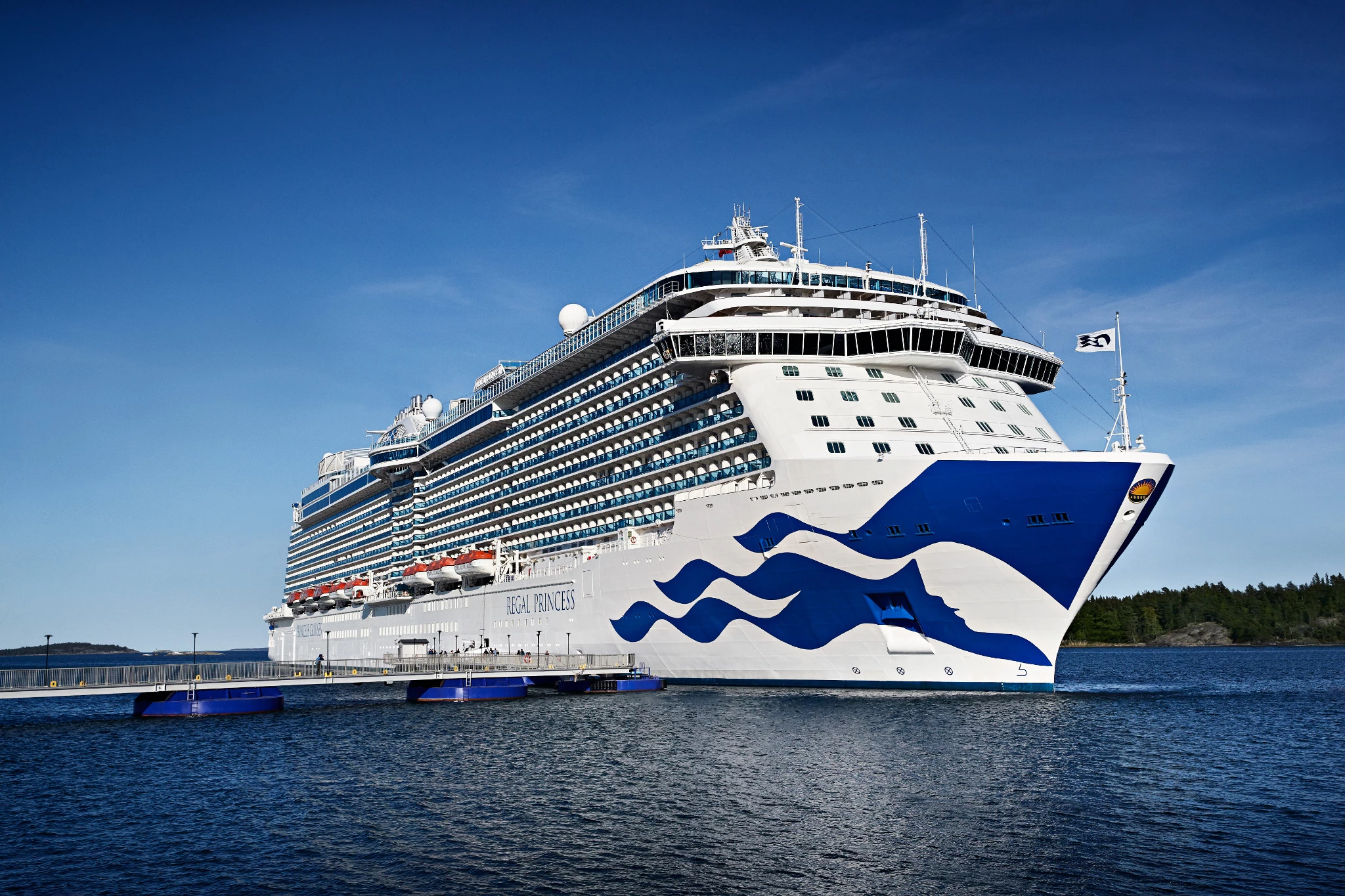
Southern Caribbean Islander
Hong Kong market · HKD
Princess Cruises
Regal Princess
New York
Fort Lauderdale
–Day-by-day itinerary
- New York City (Manhattan or Brooklyn), New YorkA leading global city, New York exerts a powerful influence over worldwide commerce, finance, culture and fashion, and entertainment. The city consists of five boroughs and an intricate patchwork of neighborhoods. Some of these include Lower Manhattan and the New York Stock Exchange, Battery Park and South Street Seaport, Chinatown, trendy SoHo and Greenwich Village, along with Little Italy, the flat Iron District and Gramercy Park. Famous Central Park covers 843 acres of paths, ponds, lakes and green space within the asphalt jungle. Many districts and landmarks have become well-known to outsiders. Nearly 170 languages are spoken in the city and over 35% of its population was born outside the United States.
- At Sea
- At Sea
- At Sea
- TortolaTortola, the largest island of the British Virgin Islands, is a peaceful getaway for nature lovers. Tortola is Spanish for "Land of the Turtle Dove," so named for the shape of the island. Characterized by rugged mountain peaks, white-sand beaches, banana trees and clusters of palms, this sailor's paradise has a distinct nautical charm and West Indian flavor.
- St KittsJagged volcanoes soaring above azure and turquoise seas, dense rainforests in myriad shades of green, rolling fields of sugarcane--welcome to St. Kitts. Along with its neighbor, Nevis, St. Kitts presents an exotic landscape more common to Polynesia than the Caribbean. The islands' terrain, rich soil, and climate made them ideal locations for raising sugarcane. In fact, St. Kitts and Nevis were once the crown jewels of the Caribbean. During the 17th and 18th centuries, Spain, France and England vied for control of the islands, with the English finally winning out in 1787. Today, British and French heritage is evident on both islands. Basseterre, the capital of St. Kitts, boasts fine, restored colonial buildings. Impressive Brimstone Hill Fortress, called the "Gibraltar of the West Indies," is one of the most impressive fortresses in the Caribbean.
- MartiniqueTo the Arawak, Martinique was their treasured "isle of flowers." Lying in the Lesser Antilles between Dominica and St. Lucia, the island is a tropical paradise of dense rain forest, rolling savanna and stunning beaches. The rich volcanic soil nourishes banana plantations and pineapple fields as well as mangoes, papayas, lemons, limes, and West Indian cherries. Little wonder that Columbus praised Martinique as the "best, most fertile, most delightful, and most charming land in the world." Martinique's cultural heritage is as rich and bountiful as its soil. The island has been governed by France for over three centuries. Today an overseas department of France, the island boasts a culture that is a unique and zesty blend of French, Caribbean, African and Middle Eastern influences, resulting in that spicy combination called Créole. Créole culture is reflected in Martinique's architecture, cuisine, language, and music. For years the mayor of Fort-de-France was the internationally acclaimed Créole poet Aimé Césaire. Five centuries after Columbus made his landfall, Martinique remains a rare flower in the Caribbean.
- St LuciaNestled below the Pitons, twin peaks rising over 2,600 feet above the azure waters of the Caribbean, St. Lucia is an oasis of tropical calm. The island's capital, Castries, is a town of charming, pastel-colored colonial buildings, home to some 60,000. Yet despite its peaceful setting, St. Lucia has a turbulent and colorful history. Fierce Carib warriors overran the peaceful Arawaks in the 9th century. The first European settler, Francois Le Clerc, was a French buccaneer. Le Clerc's countrymen followed in his wake, establishing the town of Soufriere in 1746. Sugar was the lure, sugar was king. Within four decades some 50 plantations flourished on the island. Thus St. Lucia became part of the Caribbean's 18th-century trade triangle of sugar, slavery, and rum. Today this beautiful island welcomes visitors drawn to its exotic tropical landscape, superb beaches, crystalline waters, and colorful marine life.
- BarbadosBarbados is one of the few Caribbean islands solely colonized by one nation. It's no wonder Bajans describe their country as being "more English than England sheself," surnames like Worthing and Hastings abound. But look around and you know you're not in England: rich and fertile tropical fields meet a glistening, azure sea. The soft pastels of old chattel houses blend with the vibrant reds, oranges, and greens of roadside fruit stands. In short, Barbados exudes a charm all its own. Perhaps it is due to Bajan culture, that celebrated blend of English tradition and the African heritage brought to the island by slaves imported to work the sugar plantations. The potent brew which results flavors every aspect of island life, from music, dance and art, to religion, language and food.
- At Sea
- ArubaDutch influence still lingers on this balmy Caribbean island, part of the former Netherlands Antilles until its independence in 1986. Aruba is a contrast: the island's arid interior is dotted with cactus and windswept divi-divi trees while secluded coves and sandy beaches make up its coast. Aruba's long and colorful heritage is reflected in its dialect. Called Papiamento, it is a tongue that combines elements of Spanish, French, Portuguese, Dutch, African and English.
- ArubaDutch influence still lingers on this balmy Caribbean island, part of the former Netherlands Antilles until its independence in 1986. Aruba is a contrast: the island's arid interior is dotted with cactus and windswept divi-divi trees while secluded coves and sandy beaches make up its coast. Aruba's long and colorful heritage is reflected in its dialect. Called Papiamento, it is a tongue that combines elements of Spanish, French, Portuguese, Dutch, African and English.
- CuracaoHistorians still contend over which European adventurer first spied the largest island in the former Netherlands Antilles. Some historians claim the honor for Alonzo de Ojeda; other historians champion Amerigo Vespucci. Little does it matter; today's travelers are content to bask beneath sunny skies cooled by the trade winds. Lying some 40 miles off Venezuela, Curaçao boasts a landscape that is dramatic, stark, and volcanic. In contrast, Willemstad, the capital, seems a cozy Dutch haven with its neat row houses. And while those gabled and tiled roofs illustrate the island's heritage, the bright, pastel houses speak pure Caribbean. Islanders themselves reflect this same colorful contrast: over 50 different nationalities have come to call Curaçao their home.
- At Sea
- At Sea
- Fort LauderdaleAccording to the popular 1960 beach movie, Fort Lauderdale is "where the boys are." The city's reputation as America's Spring Break capital, however, has been replaced with the more favorable image of a prime family tourist destination, attracting more than 10 million visitors annually. The most popular beach resort in Florida is even more rightly famed as the "Yachting Capital of the World," with more than 40,000 registered crafts calling its waters home. The city also prides itself on being the "Venice of America" with more than 300 miles of navigable waterways. Fort Lauderdale boasts world-class theaters, museums, sightseeing, and shopping.